2026-09-28
ONDA Calf Lifting in Hongdae: How to Differentiate Muscular vs. Fatty Calves?
Understand the difference between muscle, fat, and swelling in calves, and discover how ONDA Coolwaves precisely targets subcutaneous fat and skin laxity for refined lower leg contours.

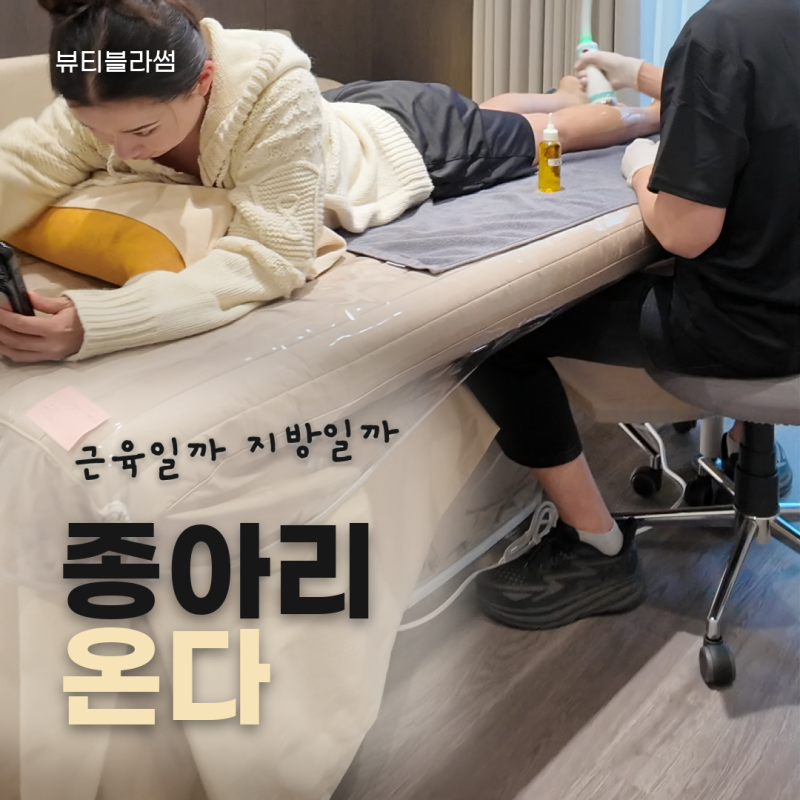
Whenever it’s time to wear shorts or short skirts, many people find themselves checking their calves first in front of the mirror. While the ankles may be slim, the back of the calves might look bulky, or deep sock marks might remain by evening.
A common phrase heard in the consultation room is, "I even stopped lower-body workouts, but my calves haven't changed." Conversely, some people rarely exercise yet have remarkably firm, hard calves. Even though both might fall under the category of 'thick calves,' the underlying reasons can be quite different upon closer inspection.
Today, Beauty Blossom Clinic in Hongdae/Hapjeong will walk you through the reasons why calf contours are classified into muscle, fat, and swelling, and explain which aspect ONDA specifically addresses.
Because ONDA is a body-contouring procedure that delivers microwave energy deep into the subcutaneous fat layer, it primarily targets calves where localized fat and loss of elasticity are the main concerns.
It is not a treatment designed to reduce muscle bulk itself. Therefore, we first analyze the calf type to determine whether ONDA is suitable for the targeted area.
Are the reasons for thick calves always the same?
The silhouette of the calf is shaped by varying proportions of muscle, subcutaneous fat, and swelling from person to person.
The muscles located along the back of the calf are engaged when walking, climbing stairs, or standing on tiptoes. In individuals with well-developed calf muscles, the upper part of the calf bulges out prominently and turns hard when flexed.
In other cases, a thick layer of subcutaneous fat covers the muscle. The contours appear rounded and soft, and a pliable, pinchable layer can be felt by hand. If the entire area from below the knee down to the ankle appears uniformly thick, it is more likely due to fat accumulation.
Swelling (edema) is also an important factor. After prolonged standing or sitting, or following a high-sodium meal, calf circumference can vary noticeably between morning and evening. This component is heavily influenced by lifestyle habits rather than aesthetic procedures alone.
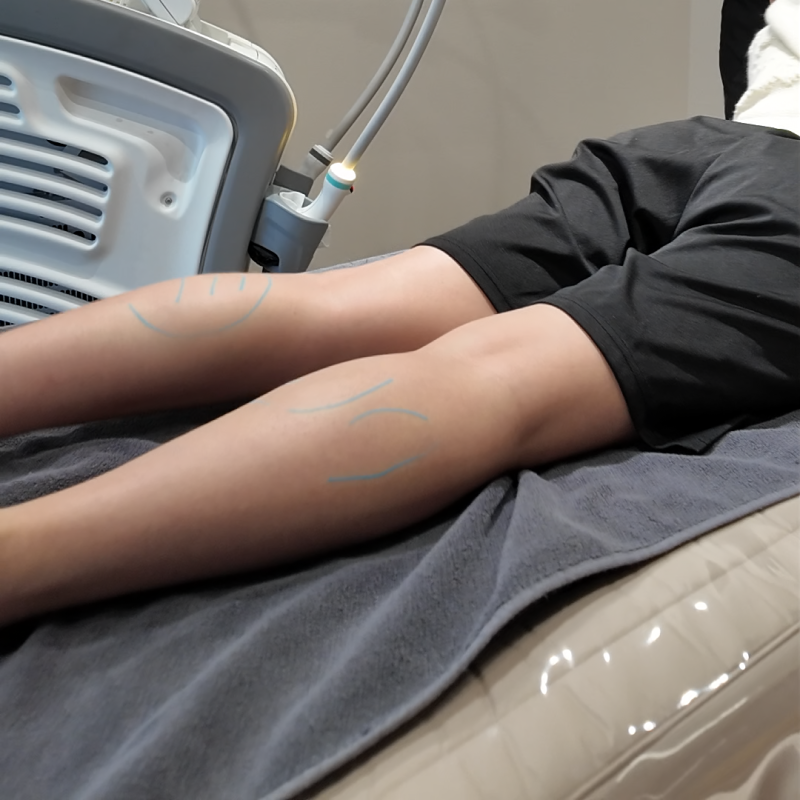
In reality, most individuals present a combination of all three elements. That is why we map and mark the specific target areas with a surgical pen prior to treatment.
How do we distinguish muscular calves from fatty calves?
We evaluate both the degree of firmness upon muscle contraction and the thickness of the pinchable tissue layer.
During a consultation, we first assess the calf shape in a relaxed standing posture. Next, we ask the patient to stand on tiptoes. If muscle is the primary factor, the upper calf bulges distinctly and feels rock-hard.
If fat is the main cause, flexing the muscle does not drastically alter the outer contour. When gently pinched, a noticeable layer of tissue is grasped, and the fullness is often distributed along the lateral contours or just beneath the knee rather than solely at the back.
Many patients initially say, "I have muscular calves, so this probably won't work for me." However, upon assessment, it is common to find muscle in the upper calf while the lower and inner contours consist mostly of fatty tissue.
When swelling is suspected, we inquire about the time of day the calves appear thickest. If they look fine in the morning but feel tight and heavy by late afternoon, water retention is likely playing a major role.
What does ONDA address in the calf area?
ONDA utilizes 2.45 GHz microwave energy that targets fat cells selectively, delivering therapeutic heat deep into the subcutaneous fat layer.
This proprietary energy is known as Coolwaves. While an integrated contact cooling system protects the skin surface, the energy penetrates into the dermis and subcutaneous fat below.
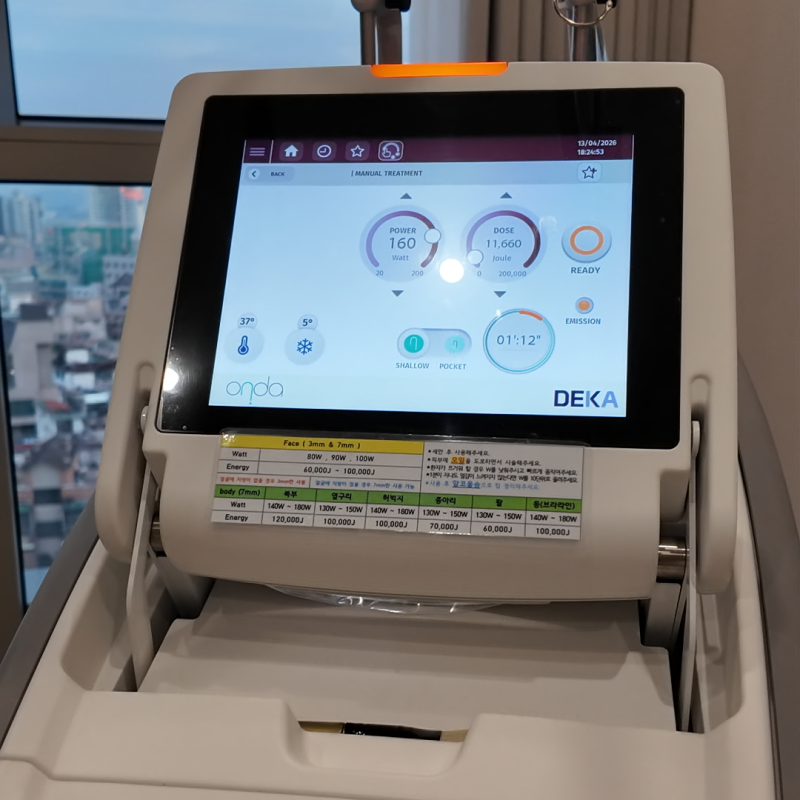
The treatment aims for two key effects: facilitating the breakdown of fat cells, and stimulating collagen remodeling to tighten and firm the skin. This dual approach is ideal for individuals dealing with soft, flaccid calf contours or noticeable cellulite along the lower legs.
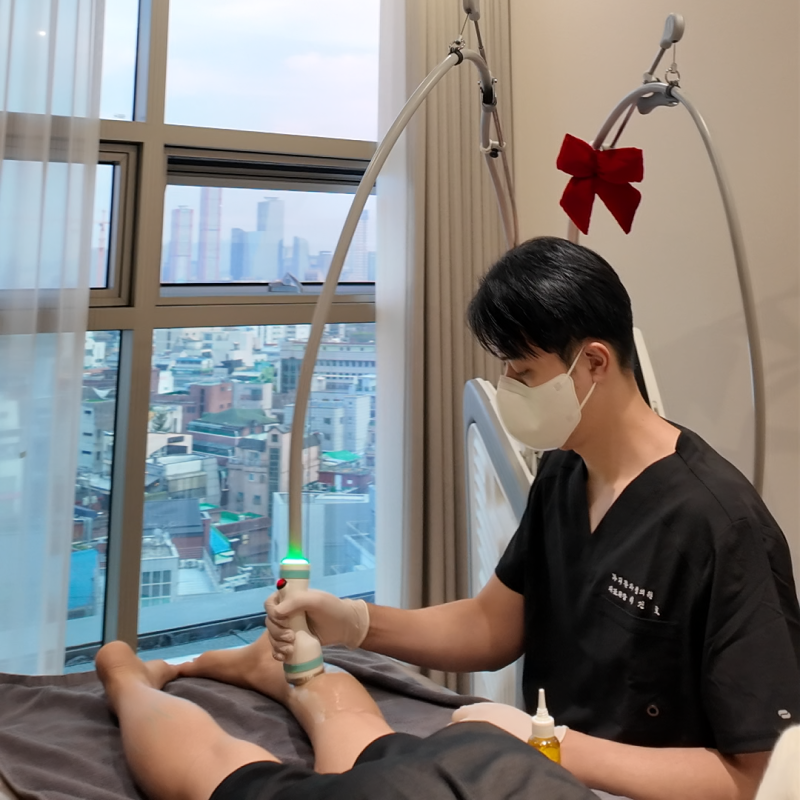
The system is equipped with two handpieces: 3mm and 7mm. For larger body areas, the 7mm handpiece is utilized to deliver energy deep into the adipose layers.
Can ONDA help if muscle is the primary cause?
ONDA does not directly decrease the bulk of muscle tissue.
Because ONDA's energy specifically targets fat layers and skin elasticity, the expected contour change will be limited if the calf bulge is predominantly caused by enlarged muscle bellies.
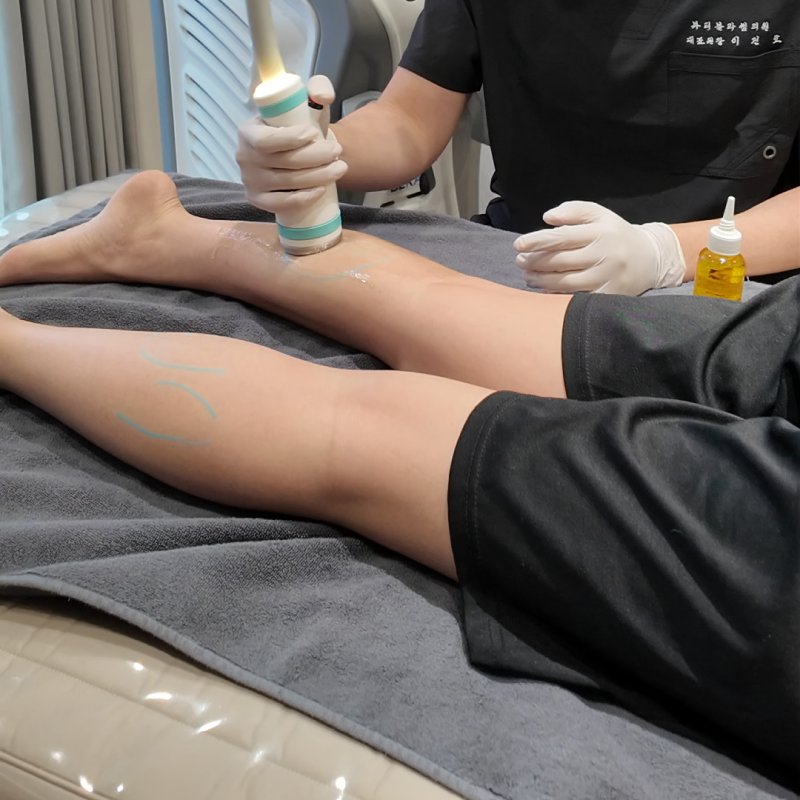
We explain this transparently during consultations. If muscle bulk is the primary cause, we explore whether alternative modalities are warranted; however, if there are adjacent zones with pinchable fat and mild skin laxity, ONDA can be tailored precisely to those segments.
If an assessment reveals, "I thought it was purely muscle, but there is actually considerable fat," ONDA becomes a viable option. This is precisely why differential evaluation comes first.
What does the treatment feel like?
Most patients feel a comfortable deep warming sensation, balanced simultaneously by the contact cooling mechanism.
Calf treatments are performed with the patient lying prone (face down). A specialized treatment oil is applied to the marked zones, and the handpiece is continuously moved in smooth, controlled motions without stopping in one place.
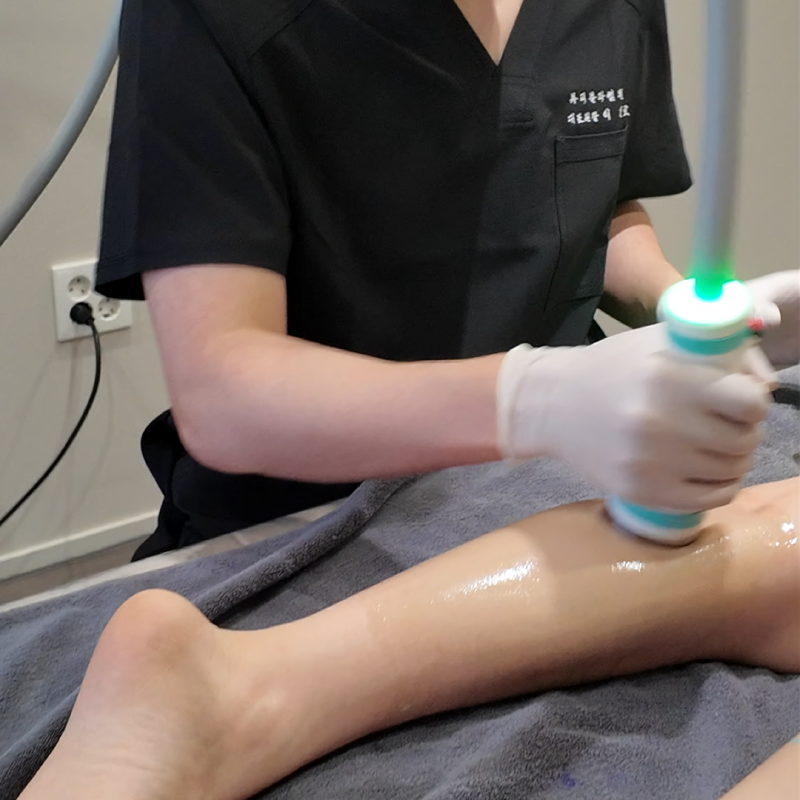
Because the contact surface actively cools the epidermis, the skin surface does not feel uncomfortably hot; rather, it feels as though the tissues underneath are gently heating up. Sensation levels vary individually and can even differ between zones on the same leg.
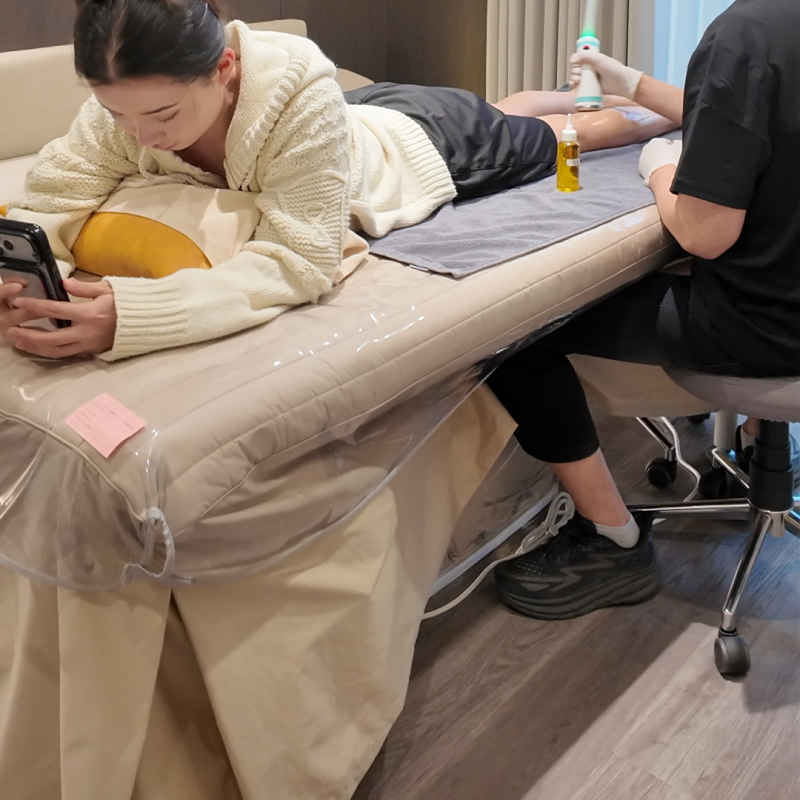
If you experience excessive heat, let the practitioner know immediately rather than enduring it. Energy settings and gliding speed can be adjusted on the spot. Many patients comfortably check their phones while resting during the procedure.
Treatment typically takes approximately 20 to 40 minutes, depending on the surface area and designated zones.

How many sessions and what intervals are recommended?
We typically design treatment plans at 2- to 4-week intervals across multiple sessions.
Changes in subcutaneous fat and tissue firmness occur gradually over time rather than instantaneously. For this reason, a structured series of treatments is planned rather than relying on a single session.
For body areas, visible improvements are commonly observed after 3 to 5 sessions. The exact number of sessions depends on calf anatomy, subcutaneous fat thickness, and desired contouring goals.
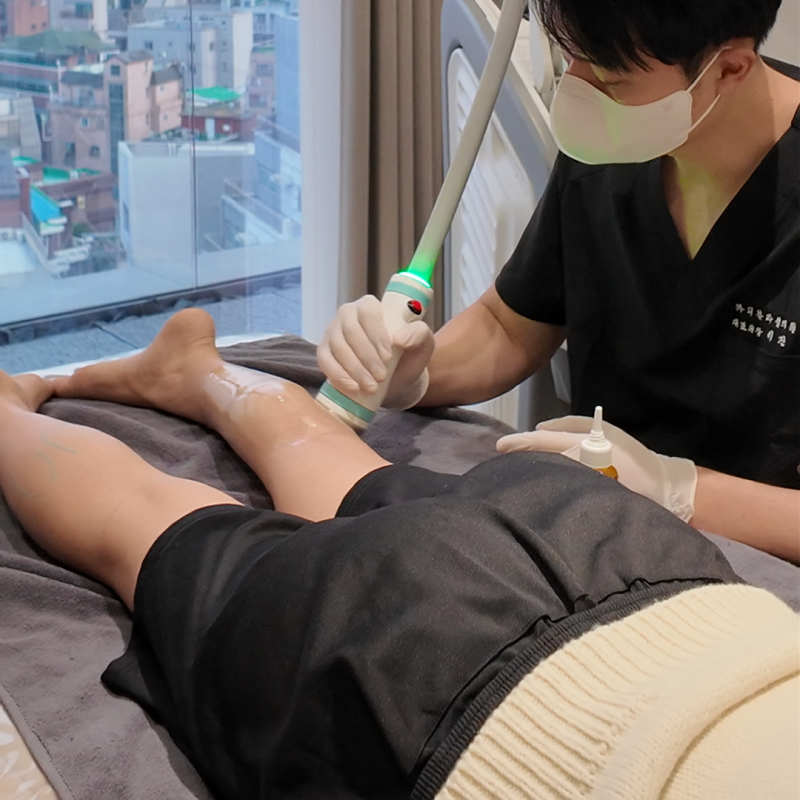
If preparing for warmer seasons when the legs will be uncovered, starting the sessions well in advance allows ample time for optimal results. Calf contouring can also be combined with surrounding leg areas, such as the thighs.
What post-treatment precautions should be followed?
Avoid alcohol consumption and saunas on the day of treatment, and maintain adequate hydration.
After the session, residual oil and marking lines are thoroughly cleaned off. Most patients resume their normal routines right away, though strenuous heat-inducing activities should be avoided for the rest of the day.
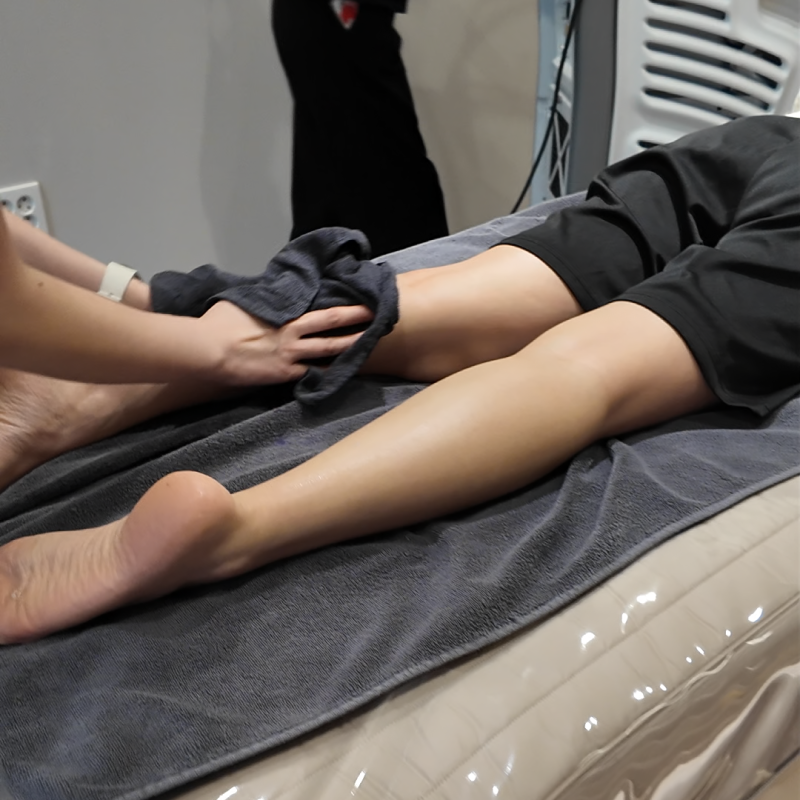
The treated area may feel warm or show mild transient erythema (redness). This generally subsides over a short period; however, if you have an important event scheduled that day, please inform us in advance.
If swelling is a prominent issue, daily habits must also be addressed. Periodically flex and rotate your ankles during prolonged sitting, and monitor whether leg heaviness worsens following high-sodium intake.
Frequently Asked Questions
Can I treat only the calves?
Yes, treatment can be customized exclusively for targeted areas of concern. Body ONDA is widely applied to areas including the abdomen, flanks, upper arms, and thighs, with the calves treated as a focused lower-body zone.
Can I see results after just one session?
Rather than assessing results from a single session, a series of treatments spaced 2 to 4 weeks apart is recommended. The degree of contour enhancement varies depending on baseline fat thickness and skin elasticity.
Is there any pre-treatment preparation?
Wearing comfortable clothing that easily exposes the lower legs is sufficient. Please let us know during your consultation if you have recently undergone other calf treatments or are currently taking medications.
If redness or warmth in the treated area persists for more than a few days, or if any unusual symptoms such as blistering appear, please contact the clinic promptly rather than waiting.
Identifying the root cause of calf volume makes designing an effective treatment plan straightforward. During your consultation, we will assess your legs in both standing and tiptoe positions, as well as review when your calves feel most swollen throughout the day.
Beauty Blossom Clinic is located on the 6th and 8th floors of Medione Medical Center (reception on the 6th floor), 66 Yanghwa-ro, Mapo-gu, Seoul, right in front of Hapjeong Station Exit 3.