2026-09-18
Hongdae Potenza: N-Tip vs. Pumping Tip – What's the Difference and How to Choose?
Confused between Potenza's N-Tip and Pumping Tip? Learn how non-insulated RF needle energy and pressure-assisted booster delivery differ to pick the right treatment for your pores and skin texture.


When researching Potenza, you often encounter unfamiliar terms attached to the device name, such as N-Tip, Pumping Tip, or CP-Tip. Even though it is all the same Potenza, the descriptions and configurations vary, making it confusing to know which one to choose.
First and foremost, the more expensive tip is not necessarily better for every skin type. The N-Tip is defined by its micro-needle structure that delivers radiofrequency (RF) energy, while the Pumping Tip adds a pressure-based delivery mechanism. The choice should depend on the type of stimulation your skin needs and whether any complementary formulas will be applied alongside it.
If you looked up Potenza for enlarged pores and suddenly saw skin boosters mentioned, you might wonder, "Do I really need to add that, too?" Today, Beauty Blossom will break down these key differences step-by-step for anyone considering Potenza in Hongdae or Hapjeong before their consultation.
What Changes When You Switch Potenza Tips?
First, the tip is the disposable component attached to the end of the handpiece. Depending on the arrangement and structure of the micro-needles within the tip, the method of energy delivery changes entirely. There are even non-insulated needle-free varieties, so assuming every Potenza treatment is identical just because it shares the same device name can be misleading.
The two options compared here—the N-Tip and the Pumping Tip—both utilize micro-needles. They use these needles and radiofrequency energy to stimulate the skin, promoting improvements in skin texture and elasticity during the subsequent healing process. This process is fundamentally different from topical skincare creams or surface-level light lasers.
Even with the same handpiece, the treatment details vary significantly based on which tip is attached, which areas are treated, and what depth and intensity settings are used. Therefore, when looking at other people's Potenza reviews, you cannot simply expect the exact same outcome just because the machine is the same.
How Does the N-Tip Deliver Radiofrequency Energy?
The N-Tip refers to a tip that uses non-insulated micro-needles. Here, "non-insulated" relates to the needle structure, where the shaft is not coated with electrical insulation. Patients do not need to memorize medical jargon, but it helps to know that the distribution and coverage of thermal energy vary from tip to tip.
Choosing an N-Tip does not mean the treatment is applied at an identical depth across the entire face. The forehead and cheeks differ in skin thickness and underlying tissue architecture, and even different parts of the same cheek require individual assessment. The tip's name simply indicates the tool being used—it does not define a one-size-fits-all setting for your entire face.
If pores or rough skin texture are your concern, you must first accurately identify the visible marks. Circular pore openings and pitted acne scars may look similar in photos, but they are entirely different skin issues. Expecting deep scars to be completely resolved with a single type of tip can create a gap between expectations and the actual treatment plan.
What Does the Pumping Tip Add to the Treatment?
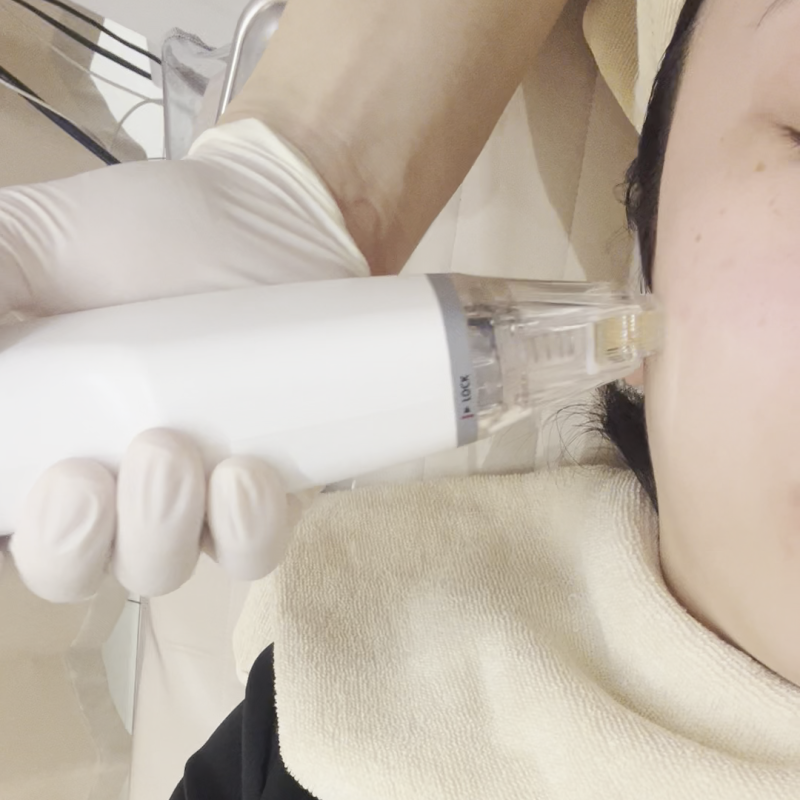
The Pumping Tip is designed to assist the delivery of topical formulations into the skin using micro-channels created by needles alongside subtle pressure changes. You may also see it referred to as the CP-Tip. This is why you need a clear plan for both the RF energy and the specific complementary product being paired with it.
However, simply seeing the word "pumping" should not lead you to believe that every active ingredient penetrates the skin equally, or that it replicates a direct needle injection. Each product has a designated purpose and approved method of application. One must distinguish whether a solution is intended for topical absorption or direct injection.
If a clinic mentions "pairing with a skin booster," avoid simply nodding at the name—ask which product is being used and for what precise purpose. Whether your concern is dehydration, coarse texture, or scarring will change the clinical rationale for adding a topical booster. More ingredients do not automatically equal superior results.
If you have previously experienced severe redness or itching after applying certain cosmetic ingredients, let your practitioner know the product names. You cannot assume a commonly used component will be safe for your skin simply because it is well-tolerated by others.
Which Tip Is Right for My Skin?

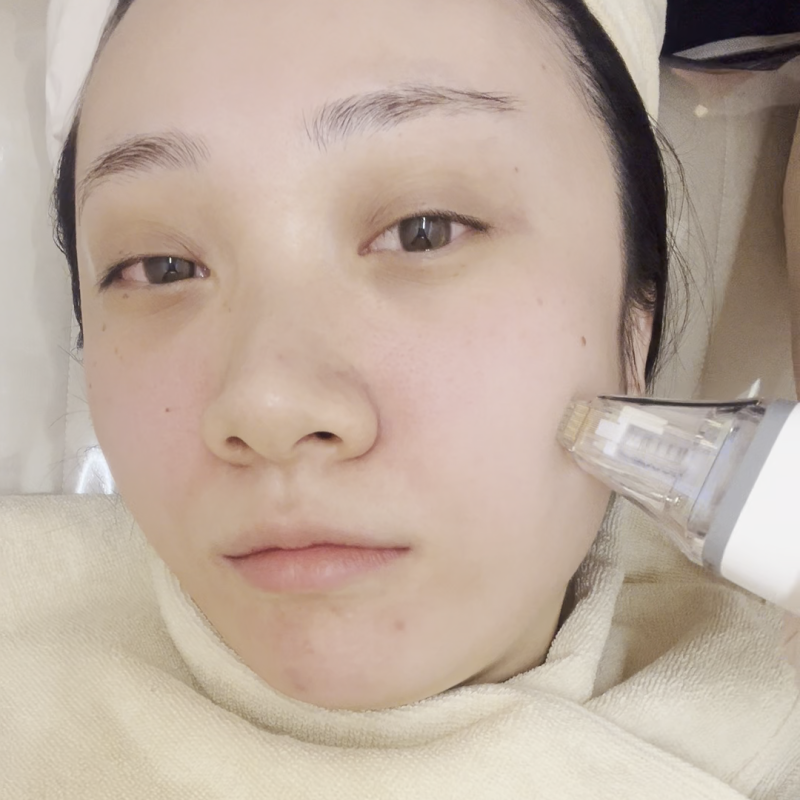
Before choosing a tip, pinpoint your single biggest concern. Whether you notice enlarged cheek pores in photos, feel severe tightness after washing your face, or find foundation settling into acne scars, each concern suggests a different clinical starting point. If you have multiple issues, prioritize which one you wish to address first.
For instance, if you visit for enlarged pores but have active, red inflammation, managing that inflammatory state should take priority over selecting between the two tips. Similarly, stinging, flaking skin should not be treated by immediately opting for a Pumping Tip simply because it feels dry.
Conversely, if there is a clear, valid reason to add a complementary product, you can evaluate the treatment plan based on that specific objective. Rather than focusing solely on how much can be packed into a set price, it is far more helpful to understand what this procedure can realistically accomplish—and what its limits are.
During your consultation, go beyond asking, "Which tip is better?" Ask targeted questions like, "Why do you recommend this specific tip for my skin?", "Why is this additional product necessary?", or "Are there other treatments I should undergo first?" Connecting questions to your actual skin condition yields far more practical answers.
Is a Stronger Intensity and Deeper Depth Always Better?
Potenza is a medical procedure that utilizes thermal energy. Deeper, stronger, or higher-shot treatments do not guarantee proportionally better results. Skin thickness, subcutaneous fat layers, and sensitivity vary across facial zones, requiring customized adjustments for each area.
Knowing the shot count helps you understand the treatment protocol. However, numbers alone do not measure clinical care or efficacy. One must evaluate where the shots are placed, whether there is excessive overlap in a single zone, and how the skin reacts. It is also best to avoid requesting the exact settings someone else received.
Likewise, pain should never be treated as a measure of success. Experiencing significant pain does not mean the treatment will work better. If the discomfort feels unbearable, notify your practitioner immediately. Even with topical numbing cream, sensory perception varies depending on the anatomical area and procedural settings.
Essential Pre- and Post-Care Considerations
Always inform your clinic in advance if you have recently undergone other laser or chemical peeling treatments, are taking any medications, or have a history of post-inflammatory hyperpigmentation or scarring. If you have active skin inflammation, open wounds, or slow healing tendencies, treatment timing may need adjustment. If you have important photoshoots or events coming up, share those dates as well.
Following the procedure, temporary redness, swelling, dryness, stinging, and micro-crusting may occur. Rarely, complications such as burns, infection, pigmentary changes, or scarring can happen. With RF micro-needling, injury to adipose tissue or nerves must also be guarded against. Changing the tip or adding a skincare product does not eliminate these intrinsic risks.
While your skin is sensitized, avoid harsh scrubbing, physical exfoliants, or chemical peeling agents. Keep your skin well-moisturized and protected with sunscreen, and strictly follow clinical instructions regarding when you can resume washing your face, applying makeup, or exercising. Being able to resume daily activities does not mean your skin is ready to endure irritation.
If redness progressively worsens, or if you develop blistering, pus, severe pain, or sensory abnormalities, do not dismiss these as normal recovery steps—contact the treating clinic immediately. Rather than sending a single photo, providing a timeline of when and how the symptoms appeared will ensure a more accurate assessment.
Top 3 Common Questions Before Consultation
If I start with an N-Tip, can I not use the Pumping Tip later?
Your initial choice does not lock you in for future sessions. Treatment plans can be adjusted based on subsequent skin responses and remaining concerns. However, the interval and configuration for your next appointment must be determined after evaluating your healing progress.
Is the Pumping Tip the definitive answer if I have both pores and dryness?
Having both concerns does not automatically point to a single solution. The underlying cause of the dryness, the presence of erythema or dermatitis, and the actual necessity of an additional product must all be evaluated. Stabilizing the skin barrier first may be far more effective than immediately adding intensive treatments.
Can I decide whether to switch tips right after just one session?
Immediately post-treatment, swelling or temporary dehydration can make the skin look atypical. Instead of deeming the session a failure or demanding higher intensity for the next visit based purely on that day's impression, review your skin at the clinically advised follow-up milestone. Taking photos under the same lighting and distance while logging any uncomfortable symptoms will make comparisons much clearer during your next consultation.
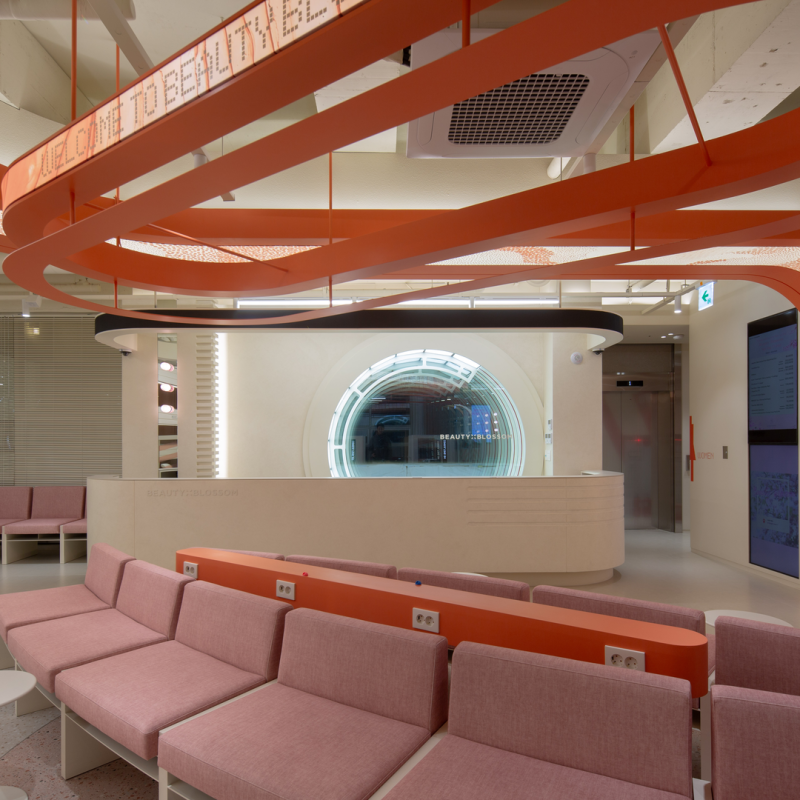
You do not need to memorize every tip name before visiting. Simply explain your main skin concerns and recent skin conditions comfortably. Beauty Blossom Clinic is located on the 6th and 8th floors of Medione Medical Center, right outside Exit 3 of Hapjeong Station, 66 Yanghwa-ro, Mapo-gu, Seoul. Reception is on the 6th floor.


Frequently Asked Questions
What is the biggest difference between the Potenza N-Tip and Pumping Tip?
The key differences lie in their radiofrequency delivery method and topical solution infusion capability. The N-Tip uses non-insulated micro-needles to deliver thermal energy across needle depths, while the Pumping Tip (CP-Tip) utilizes needle channels and pressure mechanics to assist the transdermal delivery of applied skin boosters.
Are higher intensity settings or more shots always more effective with Potenza?
No. Increasing energy depth or intensity does not yield proportionally better results. Skin thickness, subcutaneous fat distribution, and sensitivity vary across facial areas. Excessively high intensity can lead to burns or tissue damage, making customized parameter adjustments essential.
Do I always need the Pumping Tip if I have both pores and dry skin?
Not necessarily. If your skin currently exhibits active red inflammation, barrier impairment, or acute stinging, calming and restoring skin stability should take precedence over infusing additional active ingredients via a Pumping Tip.
What are the primary side effects and precautions following a Potenza treatment?
Temporary redness, swelling, stinging, and micro-scabs may develop post-treatment. Rarely, burns, hyperpigmentation, or infections can occur. Avoid harsh rubbing or exfoliation immediately after treatment, and adhere strictly to regular hydration and broad-spectrum sun protection.